
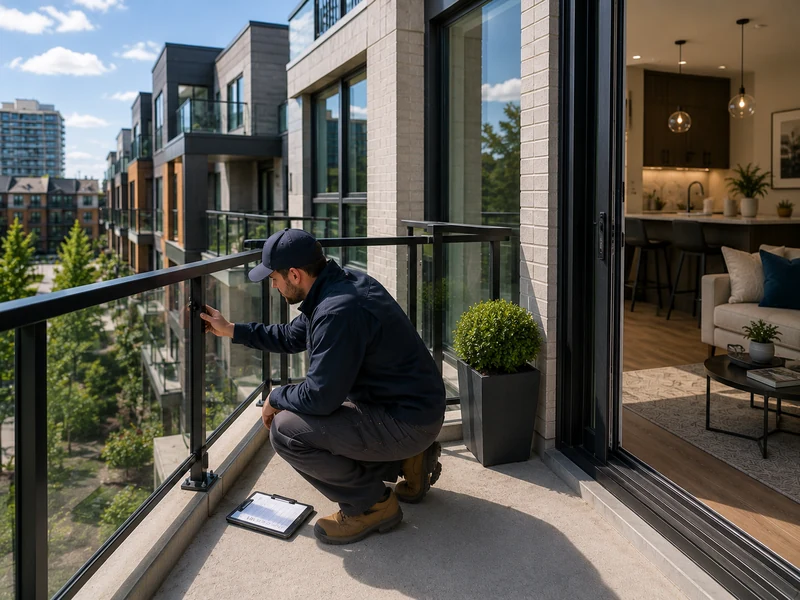
Buyers often skip the inspection on a condominium, reasoning that the building is somebody else's problem. Half of that is true. The half that is not is the half you pay for.
The dividing line
Broadly, the corporation maintains the building — the envelope, the roof, the common elements, the shared mechanical systems. You maintain what is inside your unit. An inspection concentrates on the second, because that is what is genuinely yours to repair:
- In-suite heating and cooling equipment, and its condition and age
- Plumbing fixtures, supply and drainage within the unit
- The electrical panel serving the unit, and its outlets and devices
- Windows, doors, and any balcony door assembly you are responsible for
- Interior finishes, and evidence of past or present water entry
- Ventilation, including bathroom and kitchen exhaust
That is why a condo inspection is usually closer to ninety minutes than three hours. The scope is narrower, not shallower.
What an inspection can still tell you about the building
More than people expect. Water staining at a ceiling or an exterior wall, movement at a balcony door, corridor pressure that never lets a door close properly — conditions inside a unit frequently point outward. Those observations do not replace the corporation's own engineering reporting, but they tell you what to ask about.
The status certificate tells you the corporation's financial and legal position. It does not tell you the condition of the unit you are buying. They answer different questions and you want both.
Older buildings, newer buildings
In older buildings the recurring items are original in-suite equipment still in service, plumbing that has been partly updated, and windows near the end of their life. In newer ones they are incomplete or unbalanced ventilation, finish deficiencies, and envelope details that show up as drafts or condensation in the first winter.
What to look at in a high-rise unit specifically
Some findings are particular to apartment-style buildings, and they are easy to miss when you are looking at finishes and a view.
- Fan-coil or heat pump units in a closet — age, condition, whether they have been serviced, and whether the drain pan and condensate line are clear
- Windows and sliding doors, particularly seal failure and hardware that no longer locks properly
- Evidence of past water entry at the ceiling, at exterior walls, and around any balcony threshold
- Bathroom exhaust that discharges properly rather than into a ceiling space
- Kitchen and laundry connections, and whether appliances have been installed correctly
In-suite mechanical equipment is the item buyers most often overlook and most often end up paying for. It is yours, it is not new, and replacing it in an occupied high-rise is not a simple job.
Questions worth asking the corporation
An inspection tells you about your unit; the corporation's records tell you about the building. Ask what major work has been done recently, what is planned, and whether there have been assessments or fee increases. If the building has had envelope, window or plumbing work, ask whether your unit was included — work is frequently done in phases over several years.
New condominiums
A newly built unit carries new-home warranty coverage, and the same submission deadlines apply as for a house. That makes an inspection before your thirty-day and year-end submissions more valuable in a condo than in a freehold home, not less — because in a building full of identical units, a deficiency that goes unreported gets treated as acceptable.
Townhouses are a different case
A freehold townhouse is inspected like a house — you own the roof, the envelope and the grading, and the scope reflects that. A condominium townhouse sits somewhere in between, and what you are responsible for depends on the declaration. Worth establishing which one you are buying before booking, because it changes what should be inspected.
Booking an inspection in the Greater Toronto Area, or want this discussed against your own property?