
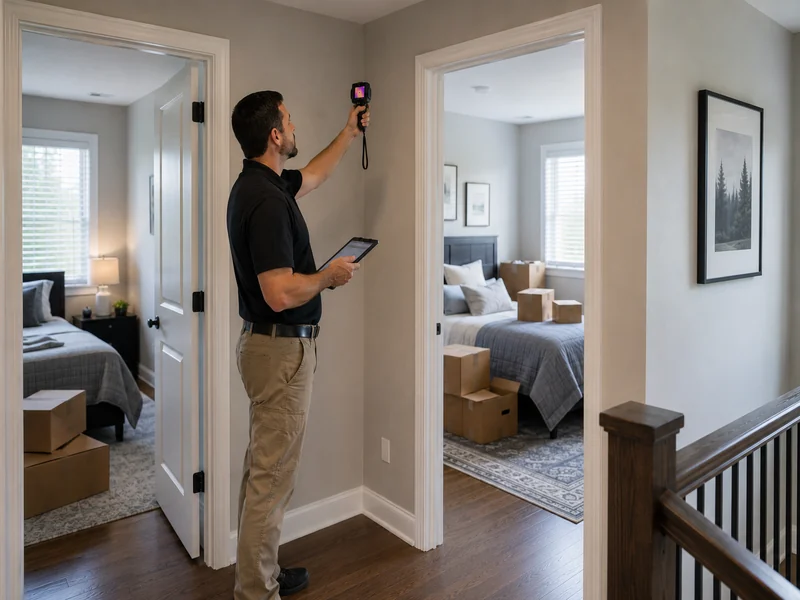
A buyer's inspector will find whatever is there. The only question is whether you find it first, on your own schedule, or hear about it during a conditional period with a deadline running and someone else holding the report.
The real advantage is timing
Surprises are expensive because of when they arrive, not because of what they are. A failing water heater discovered in February, while the house is not listed, is a quote and an appointment. The same water heater discovered nine days into a conditional period is a renegotiation, and it will not be settled at the cost of a water heater.
Findings discovered under a deadline get priced as risk. The same findings discovered before listing get priced as work.
You control the repairs
When you know in advance, you choose the contractor, collect more than one quote, and decide what is worth fixing and what is better disclosed and reflected in the price. You can also do nothing at all — but you will be doing nothing on purpose, which is a very different position from being told about it by a buyer.
What it does for the negotiation
Two things. It removes the easiest lever a buyer has, because there is less that is unexpected. And where you have already repaired something and can show the invoice, the item leaves the conversation entirely rather than becoming a credit request.
Disclosure
Ontario residential sales largely operate on a buyer-beware basis, with an important exception: known latent defects — problems that are not visible on inspection and that affect the property's habitability or safety — are a different matter. Having a report does not oblige you to publish it, but it does mean you now know what is in it.
Speak to your real estate lawyer or your agent about how to handle anything material in your particular sale. That is a legal question, not an inspection one, and it is worth asking before the report exists rather than after.
What it costs you, honestly
You pay for the inspection, and you accept that you will learn things you would rather not know. Some sellers find that a reason not to do it. The counter-argument is simple: the information exists either way. The only variable is whether you are the first person to see it or the second.
The one situation where it genuinely may not be worth it is a property being sold for land value, where the building is expected to come down. There is little point inspecting a house that nobody intends to keep.
How to use the report once you have it
Three passes. First, anything about safety — fix it, both because it should be fixed and because it is the category that most alarms a buyer. Second, anything actively admitting water, which is the finding most likely to derail a sale. Third, the cheap items that are disproportionately visible: a running toilet, a missing outlet cover, a door that does not latch. Those cost almost nothing and shape the impression a buyer's inspector forms of how the house has been kept.
What you leave undone is a legitimate choice. Price it in, and be ready to say so plainly rather than being surprised by it.
Timing it properly
Book the inspection with enough time to actually do the work — several weeks before listing rather than the week of. A pre-listing report that arrives two days before the photographs gives you the information and none of the advantage, because there is no longer time to get a quote or schedule a trade.
Who it suits most
Sellers of older properties, estate sales where nobody has lived in the house recently, and anyone selling a home they have owned for decades — where the gap between "how it has always been" and "how a buyer will see it" is widest.
Booking an inspection in the Greater Toronto Area, or want this discussed against your own property?