
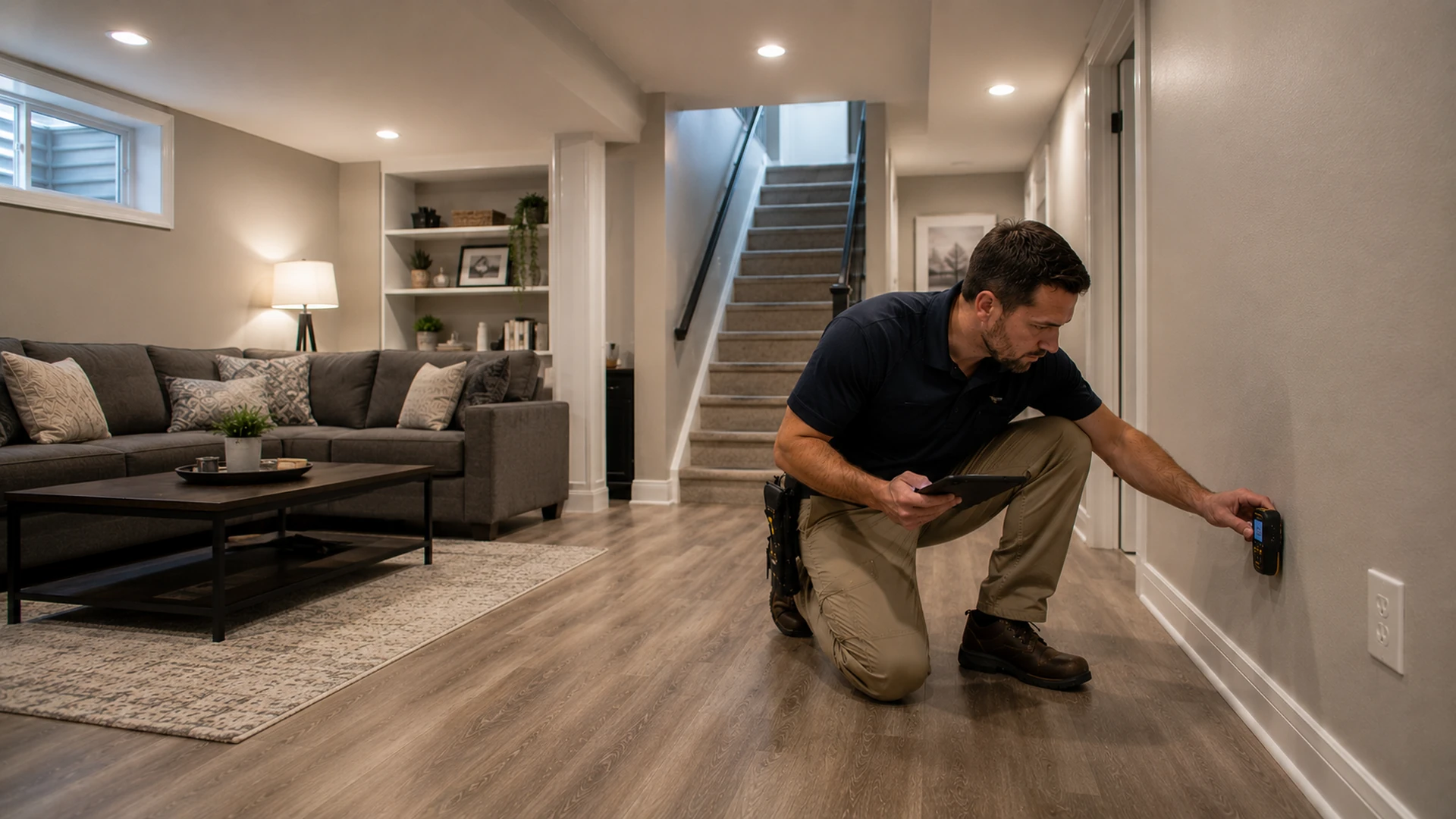
Toronto and the older inner suburbs have a lot of housing built before 1980, and it fails in patterns. Knowing the patterns does not tell you whether to buy a particular house — but it tells you what to look for, and which findings are genuinely expensive rather than merely old.
Knob-and-tube wiring
Common in homes built before roughly 1950. It is not automatically dangerous where it is intact and undisturbed, but it has no ground conductor, it was never designed for modern loads, and it degrades where it has been buried in later insulation. The practical problem is often insurance: some insurers will not write a policy on a property with active knob-and-tube, or will require it removed within a set period.
Ask your insurer before your conditions come off, not after. An electrical finding that is a modest repair can still be the thing that stops a policy being issued.
Aluminium branch wiring
Used widely in the mid-1960s to late 1970s. The concern is not the wire itself but the connections: aluminium expands, contracts and oxidises differently from copper, and terminations can loosen and overheat over decades. Remediation is usually about correcting connections rather than rewiring the house, which is a meaningful difference in cost.
Galvanised supply piping
Steel supply pipe corrodes from the inside. Long before it leaks, the internal diameter narrows and flow drops — which is why weak pressure upstairs is worth taking seriously in an older home. It is usually replaced in stages rather than all at once.
Basement moisture
The single most common finding in older GTA homes, and the one most often misread. Most basement moisture is a water-management problem outside the house, not a foundation problem:
- Grading that falls back toward the wall instead of away from it
- Downspouts discharging at the foundation
- Blocked or disconnected weeping tile
- Window wells with no drainage
Those are ordinary maintenance items. Structural cracking, displaced walls or ongoing movement are a different category, and that distinction is exactly what a structural engineering background is for. Stains alone do not tell you which one you are looking at; the pattern, location and history do.
Roof and chimney
Asphalt shingles have a service life, and older homes are frequently on their second or third roof. What matters as much as the covering is the flashing — where the roof meets a chimney, a wall or a valley is where leaks usually begin. Unused masonry chimneys are a recurring find: once a furnace is vented elsewhere, the chimney is often left standing and unmaintained for decades.
Insulation, ventilation and the attic
Pre-1980 homes were built to insulation standards nobody would accept now, and the retrofits are frequently the problem rather than the original construction. Insulation added over the years often blocks soffit vents, which stops the attic breathing; a sealed attic in a cold climate collects moisture, and moisture in an attic shows up as staining, mould growth and shortened shingle life.
The related failure is warm air leaking up from the house into the attic through light fixtures, hatches and plumbing stacks. That is what produces ice damming at the roof edge in January. The fix is usually air sealing and ventilation rather than more insulation, which is the opposite of most people's instinct.
Additions, conversions and the work nobody permitted
Older houses accumulate alterations. Finished basements, converted garages, enclosed porches, second kitchens, rooms added at the back. Each one is a place where the original structure was modified, and the quality varies enormously. The recurring findings are beams and posts that were altered without support, joists notched for plumbing, and additions on foundations that were never designed for the load.
Finished basements are the hardest case, because the finishing hides exactly the surfaces you would want to see. If a basement was finished recently and the seller cannot say what was done, that is worth asking about directly.
What to do with the findings
Almost nothing on an older home's report needs doing in the first month. Sort by consequence: anything about safety first, then anything actively admitting water, then equipment near the end of its life, then everything else. Getting quotes on the top two or three before your conditions come off tells you whether you are looking at a price conversation or a Saturday.
Older does not mean worse
A well-maintained 1920s house can be a better buy than a neglected 2005 one. Age tells you what to check; it does not tell you the condition. The purpose of an inspection on older stock is to separate the things that are simply old and working from the things that are failing, and to be clear about which is which.
Booking an inspection in the Greater Toronto Area, or want this discussed against your own property?